Private-Label Pet Supplies: How to Balance Product Value, Quality and Assortment
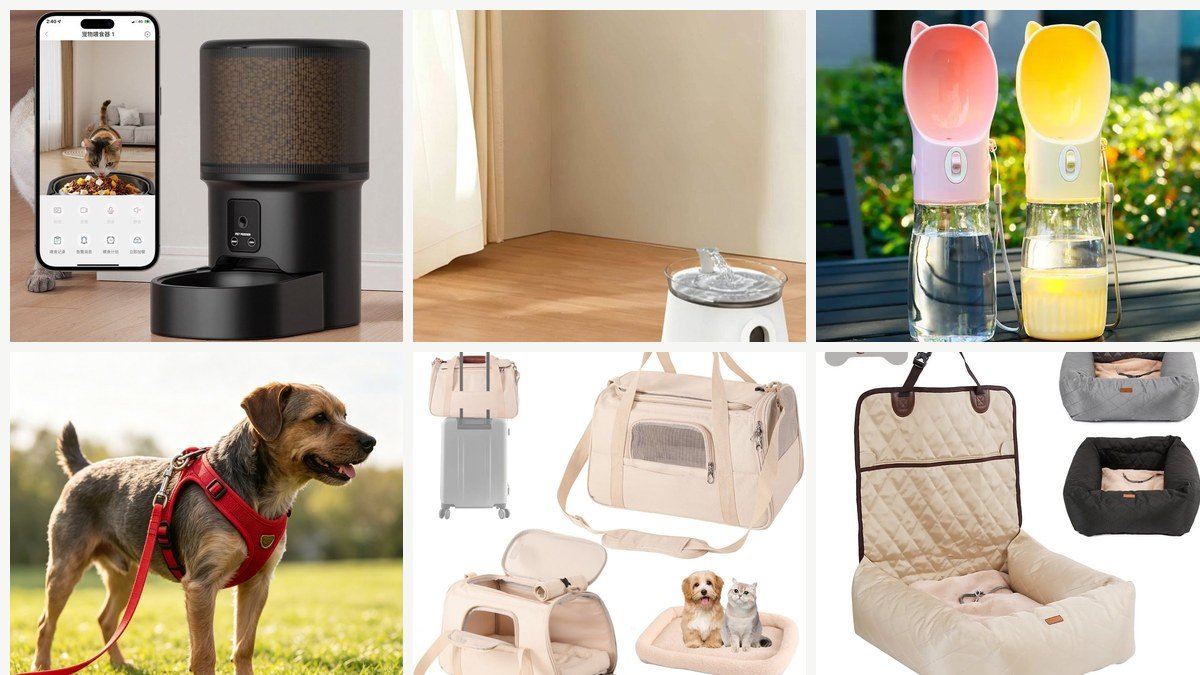
Pet owners continue to spend on their animals, but recent industry reporting points to a more selective market: shoppers are looking for products with a clear reason to justify their price. For private-label brands, that makes assortment planning and evidence-based product claims more important than simply adding more SKUs.
Pet Food Processing's October 27, 2026 industry update describes continued category growth alongside greater selectivity, premium offerings and wellness-focused demand. Although the article focuses primarily on pet food, the commercial lesson for accessory buyers is useful: explain the product's practical value, control quality and avoid unsupported claims. See the industry report for the original market context.
1. Start with a customer problem, not a catalogue
Choose products that solve a recognizable problem for your target customer. A feeder may support a more consistent feeding routine; a fountain may make water access more convenient; a travel bottle may make walks easier; a carrier may help with short trips. The product story should be specific and demonstrable.
Map each candidate SKU to a buyer segment, channel, price point and use case. If two products serve the same need, compare their differentiation and landed cost before adding both to the range.
2. Define what makes the product worth its price
Premium positioning does not come from adjectives alone. It may come from a more practical design, easier cleaning, a clearer instruction set, more durable construction or better packaging. Identify the feature that matters to the customer, then define how the supplier will verify it.
For example, if a water fountain is promoted as easy to clean, document which parts can be removed and how the cleaning steps work. If a carrier is promoted as supportive, define the structure and test method. If an electronic feeder is promoted as smart, verify each named function on the selected sample.
3. Require evidence for claims and compliance
Ask for documents that match the exact model, materials and destination market. Do not treat a supplier's general certificate, another model's test report or a logo on a product page as proof that the SKU meets a specific requirement. Keep claims such as food-contact suitability, waterproofing, noise level, app compatibility and certification status out of final artwork until they have been verified.
For HYD products, certification status must be confirmed for the specific model and market; buyers should request and review the applicable documents before making a compliance claim. This is especially important for electrical and connected products.
4. Control assortment complexity with staged launches
Begin with a small number of SKUs that share a customer segment or channel. Test demand with standard products where possible, then move to deeper OEM customization when the product concept and order volume justify the extra development work. This staged approach can reduce the risk of committing to too many colors, sizes or packaging variations at once.
HYD's standard-product MOQ is 100 units; OEM projects have a 1,000-unit MOQ. The bulk lead-time planning estimate is 30 days after all details are confirmed. These are starting points for planning; final availability and terms must be confirmed in the quotation.
5. Evaluate the supplier's ability to support the range over time
A private-label supplier should be able to maintain the approved specification, communicate component changes, support repeat orders and provide consistent product information. Ask how samples are approved, how production lots are identified, how defects are handled and how updated artwork is controlled.
Private-label assortment scorecard
- Clear target customer and product use case
- One or two defensible product benefits
- Model-specific evidence for technical and compliance claims
- Manageable SKU, color and packaging variation
- Approved sample, specification and inspection criteria
- MOQ, lead time and repeat-order controls confirmed in writing
HYD works with pet brands, distributors and wholesalers on feeding products, water dispensers, leashes, collars, harnesses, pet beds and outdoor accessories. Review our product categories and OEM/ODM services, or contact the team with your target market, product shortlist and expected quantity.
Discuss Your Project With Our Experts
Whether you need custom pet feeders, water fountains, or beds, our manufacturing team is ready to bring your vision to life.
Send a Message